
Booking Christmas or year-end? See festive menus →

A Spill guide

How to set up a coffee station at your church.

For whoever has been asked to sort out the coffee. What to buy, where to put it, who runs it, and where we can help.

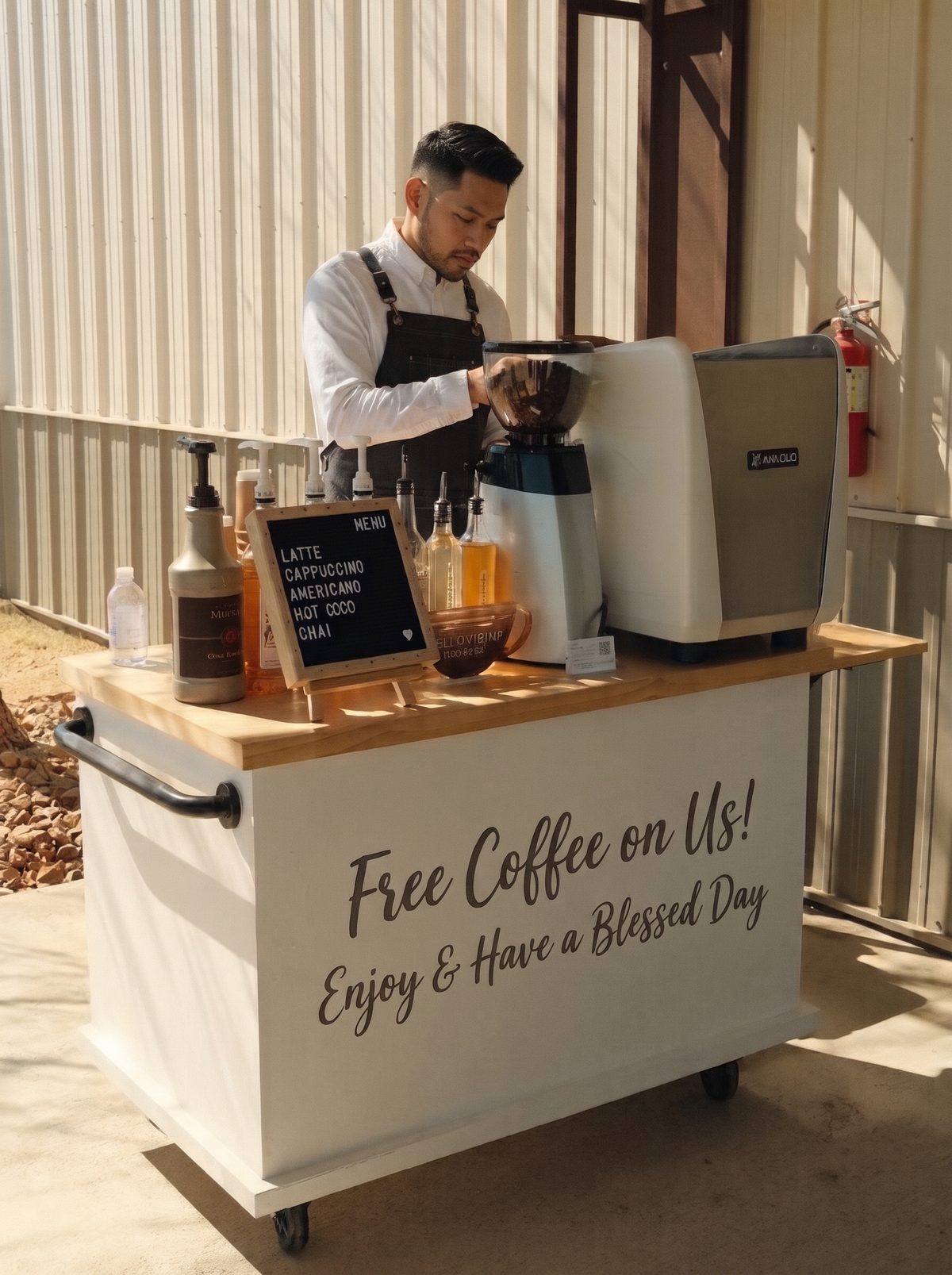
A barista at a white coffee cart with an espresso machine and a menu board; the cart reads Free Coffee on Us, Enjoy and Have a Blessed Day

Start with what it’s for

A church coffee station is not really about coffee. It is about what happens once people have a cup in their hands. They stop heading for the door. They stand in small groups. People who have sat three rows apart for years finally learn each other’s names.

Coffee and tea bring the congregation together, and they keep it together a little longer each week. For a newcomer, that extra time is often the difference between staying to talk and slipping out.

You are not opening a café. You are giving people somewhere to stand and something to hold while they meet each other.

Plan for the rush, not the total

Count per service, not per Sunday. Almost every cup is poured in one short window, usually the gap between services, when everyone arrives at the bar at once.

That is where church coffee stations might face challenges, and the challenge is usually speed of service. Every espresso drink is made one at a time, and the queue grows faster than one person can pour.

Three things keep the line moving: batch brew running alongside the espresso, a second pair of hands on the drinks, and a layout where people order at one end and collect at the other. The sections below cover each one.

Choose your setup

An espresso bar, with batch brew running alongside it, and tea for everyone else.

Why both? Espresso is what people ask for, but every cup is made one at a time. In the gap between services, batch brew is what stops the queue reaching the door.

Have something cold too. Cold brew made the day before is the simplest. This is Singapore, and it will go quickly.

What you’ll need

Decide where it goes

Layout of a church coffee station Seen from above. The coffee cart stands a step out from the wall with the barista and assistant behind it. The queue runs along the wall to the order end, where the greeter stands. Drinks are collected at the other end. Milk, sugar and lids are on a separate table a few steps away, beside the space where people gather. The doors are kept clear. WALL Barista Assistant Coffee cart Queue runs along the wall Greeter 1. Order 2. Collect Milk, sugar, lids A few steps away Where people gather Doors Kept clear
A church coffee station seen from above. Order at one end, collect at the other.

Check power and water before you buy anything

An espresso machine draws a lot of power. Before you buy, give the power rating of each machine to whoever looks after your building and ask which sockets can take it.

Then water. With a bottled water pump system the station doesn’t need a tap, so it can go wherever the people are. You still need somewhere to tip waste water and used grounds, and a fridge for milk.

Set up your volunteers

Your friendliest people should be in front of the bar, not hidden behind it.

Write the recipes on a card and tape it to the bar: how much coffee, how much water, how long. A card means the coffee tastes the same whoever is on the roster.

Teach three things before the first Sunday: how to make each drink to the card, how to steam and handle milk safely, and how to clean down at the end.

Your first Sunday

Where we can help

You can do all of this yourselves. If you’d like a hand, this is where we come in.

Or we run it for you, every Sunday or just the big ones. See our church coffee service

Talk to usWhatsApp us

Questions

Should we serve espresso or batch brew?

Both. Espresso is what most people will ask for. Batch brew runs alongside it for anyone who wants a black coffee quickly, and it keeps the line moving in the rush between services.

How many volunteers do we need?

Two at each service as a minimum: a greeter who also takes the orders, and one person who makes the drinks. Ideally add a third to assist with the drinks, so the line keeps moving.

What about people who don’t drink coffee?

Serve tea alongside the coffee, and have one cold option. For the children, hot chocolate and babycinos. A parent holding a child’s drink stays to talk.

Can Spill help us set this up?

Yes. We build a custom cart, source the right equipment for your numbers and your space, and train your volunteers. We can also create a house blend for your church, or run the coffee for you on the big Sundays.

Call us now WhatsApp us